GST Pre-Deposit Refunds: Cash, PMT-03 and the Right to Be Heard
A recent Bombay High Court ruling highlights the distinction between cash refunds and credit re-credit through FORM GST PMT-03 for pre-GST appeal deposits. Understand how Section 142, refund procedures and the right to a fair hearing affect taxpayers seeking recovery.
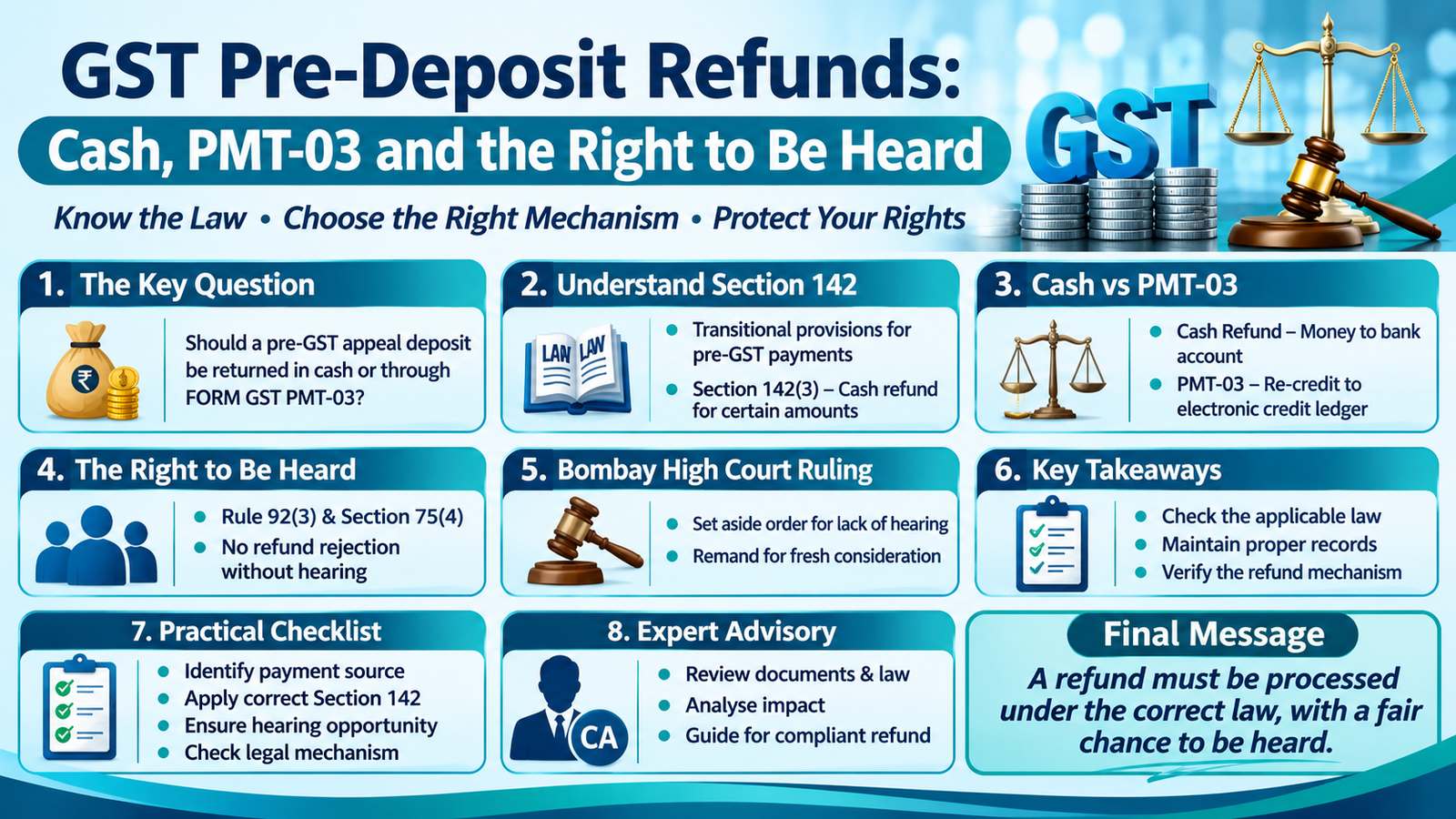
When a business wins an appeal involving a pre-GST tax liability, recovering the deposit can raise a practical question: should the amount be returned in cash, or restored as credit through FORM GST PMT-03? A recent Bombay High Court decision highlights why the answer depends on the character and timing of the payment, the transitional provisions involved and whether the taxpayer was given a fair opportunity to explain its claim.
Section 142 of the CGST Act governs specified matters carried over from the earlier tax regime. Under Section 142(3), certain refund claims relating to amounts paid under the existing law are to be processed under that law, while amounts ultimately found payable are to be paid in cash, subject to the provision’s conditions and exceptions. Other subsections deal with refunds arising from appeals, reviews, references or adjudication. The relevant subsection must be selected according to the nature of the original proceeding; Section 142 is not a blanket rule for every GST refund. FORM GST PMT-03 serves a different function. Under Rule 86, it is used in specified circumstances to re-credit an amount to the electronic credit ledger, including where a refund claim funded by a debit from that ledger is rejected, wholly or partly. It restores eligible input tax credit; it does not transfer money to the taxpayer’s bank account. Rule 92(1A) also prescribes a cash-and-credit treatment for certain refunds of tax paid under GST. These mechanisms should not automatically be applied to a pre-GST appeal deposit without first examining the transitional law and the facts.
The hearing requirement is equally important. Rule 92(3) requires a notice and an opportunity to reply where the officer proposes to reject a refund claim, and states that a refund application must not be rejected without an opportunity of being heard. Section 75(4) separately requires a hearing when requested in writing or when an adverse decision is contemplated against the taxpayer. A decision affecting the form or availability of a claimed refund should therefore be made through a fair, reasoned process, in accordance with the provisions applicable to that proceeding. In a recent matter concerning a pre-GST Central Excise appeal deposit paid partly in cash and partly through credit, the refund was credited back to a ledger through PMT-03. The Bombay High Court set aside the challenged order because the taxpayer had not been heard. It directed the authorities to reconsider the claim, including the taxpayer’s argument under Section 142 and the relevance of an earlier Bombay High Court ruling on cash refunds under the transitional provisions. Importantly, the Court remanded the matter for fresh consideration; it did not itself finally order that the disputed amount be paid in cash.
The earlier Bombay High Court ruling considered Section 142(3) and held that an amount found refundable under that transitional provision should be paid in cash rather than restored to an obsolete CENVAT account. That reasoning may be relevant when authorities reconsider a legacy refund claim, but the later remand means the outcome still depends on applying the correct statutory route and the facts of the particular claim. For taxpayers, the practical lesson is to keep the original appeal orders, proof of each cash or credit-ledger payment, the final appellate decision, refund application and all portal orders together. Check whether the amount was paid under the pre-GST law or under GST, which subsection of Section 142 applies, and whether the authority issued the required notice and hearing opportunity before taking an adverse view. If PMT-03 appears, verify whether it is legally the correct mechanism for the claim rather than assuming that a ledger credit is equivalent to a cash refund.